A short history of Bali coffee
Bali grew coffee for two hundred years before it learned to obsess over it. The island's cafes now pull shots as carefully as anywhere in Melbourne or Oslo, and almost all of them keep oat milk behind the counter. Here's how that happened, and how to drink it well.
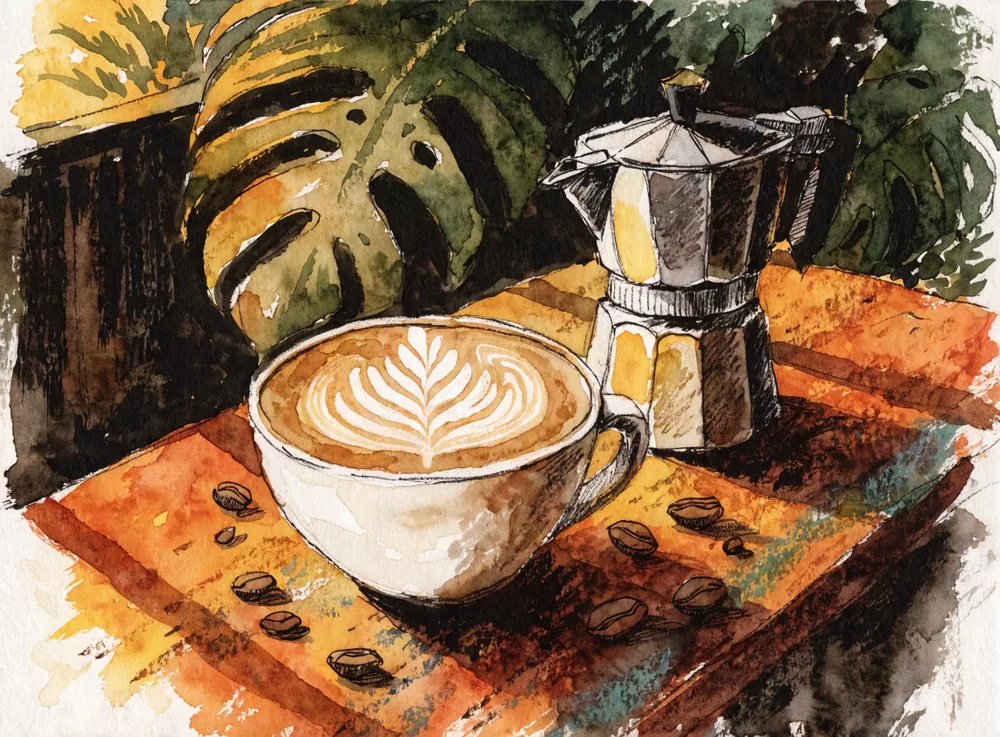
First, the beans the Dutch planted
Coffee arrived in the archipelago with Dutch colonists in the 1600s and reached Bali later, settling into the cool highlands around Kintamani. Up there, on volcanic soil at altitude, arabica found a home. Bali's Kintamani coffee even carries a protected-origin status now, grown the old way between citrus trees that lend the cup a faint orange brightness. Down in the warmer hills, robusta does the heavy lifting for everyday drinking.
Then, the cup everyone actually drank
For generations the daily ritual had nothing to do with espresso. It was kopi tubruk: coarse grounds and sugar dropped straight into a glass, hot water poured over, the lot left to settle while you talk. You drink from the top and stop before the mud. Order one at a roadside warung and you're tasting the real coffee history of the island, all of it accidentally vegan.
Kopi tubruk is patience in a glass. You wait for it to settle, then you wait some more.
The third wave rolls in
Around the mid-2010s, as Canggu turned from rice fields into a remote-work capital, the cafes followed the laptops. Roasters opened. Baristas competed. Suddenly you could get a single-origin pour-over of beans grown ninety minutes up the road, served by someone who could tell you the farm's name. The scene that grew up here is young, loud and very good, clustered thickest in Canggu, Pererenan and Ubud.
Where plant milk fits
Here's the happy part for anyone avoiding dairy: Bali's specialty cafes treat oat milk as normal, not a favour. Most stock at least one barista oat, and many keep coconut, soy and almond too. A few even make their own nut milks in house. You rarely pay a surcharge, and you rarely get a look.
- Oat steams closest to dairy and suits a flat white. Ask for "oat milk" or "susu oat".
- Coconut leans sweet and tropical, lovely in an iced latte in the heat.
- Soy is the old reliable, widely stocked, good in a cappuccino.
How to order like a local
"Kopi susu" is the island's everyday drink: coffee with sweetened milk, usually condensed. Ask for it with oat milk and less sugar and you've got a Balinese iced latte that costs less than a fancy cafe version. "Es kopi" is iced coffee. "Panas" means hot, "dingin" means cold. And if you want the unfiltered, two-hundred-year-old version, just say "kopi tubruk" and wait.